
Table of Contents
Managing PCOS (Polycystic Ovary Syndrome) involves careful dietary choices, especially in the morning. A good breakfast can help stabilize blood sugar and prevent insulin spikes. Here are 12 Indian breakfast ideas designed to support those with PCOS, ensuring they’re both healthy and delicious.
Understanding why breakfast matters for PCOS can make a big difference. Let’s explore these easy options that can kickstart your day the right way.
Why PCOS Breakfast Matters
Breakfast is often called the most important meal of the day, and for good reason. Especially for those with PCOS, it sets the tone for blood sugar levels throughout the day. Eating foods that are low in refined sugars and high in fiber can help keep insulin levels stable. This can lead to better energy levels, reduced cravings, and overall improved health.
Taking the time to choose the right breakfast can make a huge impact on how you feel. Let’s dive into 12 tasty Indian breakfast ideas that support a healthier lifestyle for those managing PCOS.
1. Oats Upma
What is Oats Upma?
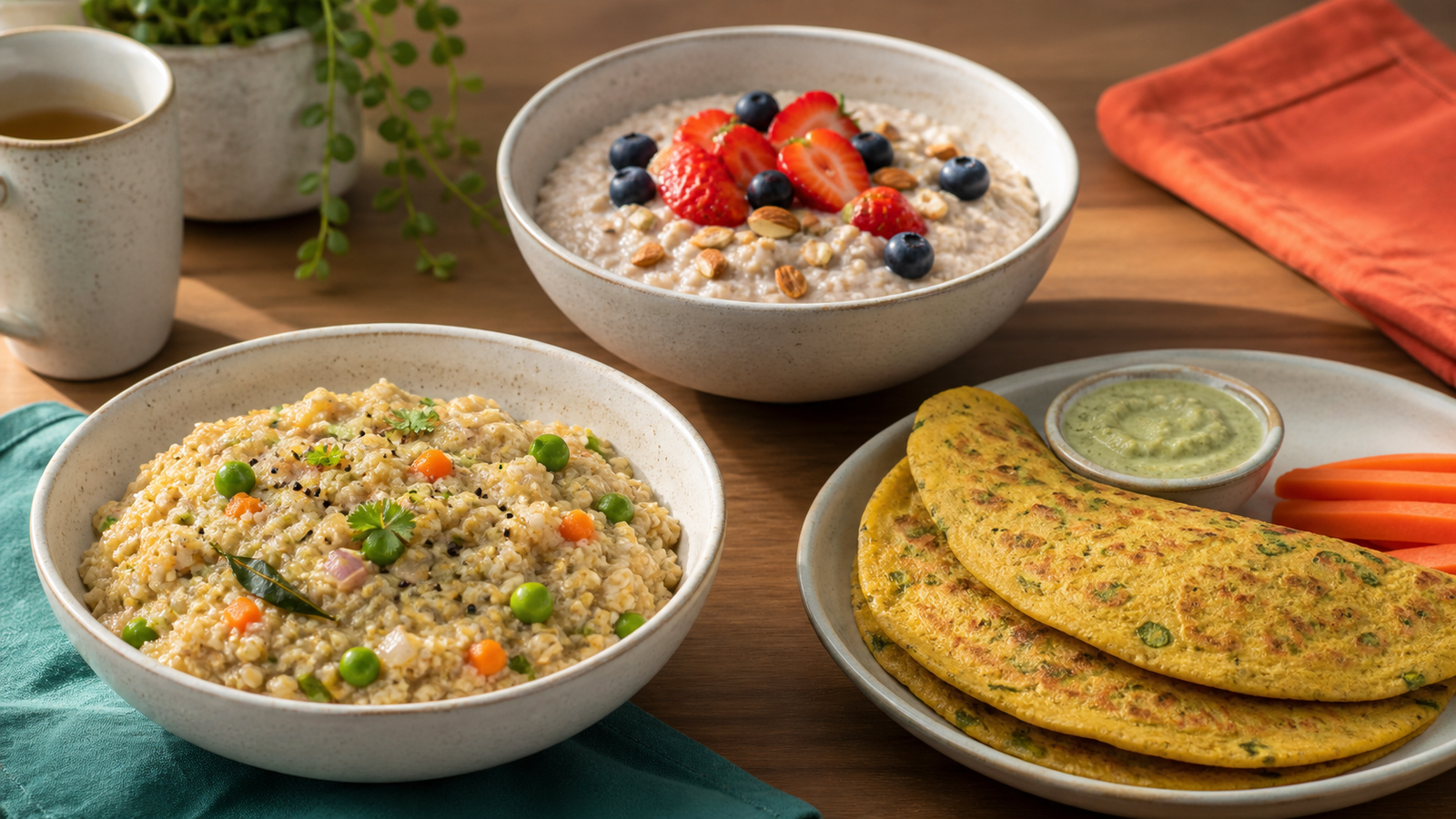
Oats Upma is a twist on the traditional South Indian Upma. Made with rolled oats instead of semolina, it’s a fiber-rich dish that won’t spike your insulin levels.
How to Make It
1. Ingredients: 1 cup rolled oats, 1 onion (chopped), 1 carrot (grated), mustard seeds, green peas, and spices.
2. Steps:
- Dry roast oats for a few minutes and set aside.
- In a pan, heat oil and add mustard seeds.
- Add onions, carrots, and peas. Cook until soft.
- Mix in the oats, add water, and cook until the oats absorb the water.
Why It’s Good
Oats have a low glycemic index, making them a great choice for breakfast. Plus, they provide lasting energy.
2. Moong Dal Chilla
What is Moong Dal Chilla?
Moong Dal Chilla is a savory pancake made from split yellow lentils. It’s high in protein and fiber, perfect for keeping you full.
How to Make It
1. Ingredients: 1 cup moong dal (soaked), spices, and chopped vegetables (like spinach or tomatoes).
2. Steps:
- Blend soaked moong dal into a smooth batter.
- Mix in spices and chopped vegetables.
- Heat a pan and pour a small amount of batter to form a pancake.
- Cook until golden brown on both sides.
Why It’s Good
The protein in moong dal helps stabilize blood sugar levels, making it a filling option.
3. Quinoa Porridge
What is Quinoa Porridge?
Quinoa Porridge is a nutritious alternative to oatmeal. It’s gluten-free and provides essential amino acids.
How to Make It
1. Ingredients: 1 cup cooked quinoa, almond milk, nuts, and spices (like cinnamon).
2. Steps:
- Heat quinoa with almond milk.
- Stir in nuts and spices.
- Cook until warmed through.
Why It’s Good
Quinoa is rich in fiber and protein, helping keep you satiated throughout the morning.
4. Egg Vegetable Omelette
What is Egg Vegetable Omelette?
A classic dish, the egg omelette can be loaded with veggies. Eggs are a great source of protein and healthy fats.
How to Make It
1. Ingredients: 2 eggs, diced vegetables (like bell peppers and onions), salt, and pepper.
2. Steps:
- Beat eggs in a bowl and mix in vegetables.
- Heat a pan and pour in the egg mixture.
- Cook until set on both sides.
Why It’s Good
Eggs can keep you feeling full longer and offer good nutrition without spiking insulin.
5. Ragi Dosa
What is Ragi Dosa?
Ragi, or finger millet, is a nutritious grain that is high in calcium. Ragi dosa is a thin, crispy pancake made from ragi flour.
How to Make It
1. Ingredients: Ragi flour, water, cumin seeds, and salt.
2. Steps:
- Mix ragi flour with water to form a thin batter.
- Add cumin seeds and salt.
- Heat a tawa and pour the batter, cooking until crispy.
Why It’s Good
Ragi has a low glycemic index and is excellent for maintaining stable blood sugar.
6. Chia Seed Pudding
What is Chia Seed Pudding?
Chia seeds are packed with fiber and omega-3 fatty acids. Making chia seed pudding is simple and versatile.
How to Make It
1. Ingredients: 1/4 cup chia seeds, 1 cup almond milk, and sweetener (like honey).
2. Steps:
- Mix chia seeds with almond milk and sweetener.
- Let it sit for a few hours or overnight until it thickens.
Why It’s Good
Chia seeds are filling and help regulate blood sugar, making this a perfect breakfast.
7. Brown Rice Puttu
What is Brown Rice Puttu?
Puttu is a traditional Kerala dish made with rice flour. Using brown rice increases its fiber content.
How to Make It
1. Ingredients: Brown rice flour, grated coconut, and water.
2. Steps:
- Mix brown rice flour with water and salt.
- Layer in a steamer with grated coconut.
- Steam until cooked.
Why It’s Good
The fiber in brown rice helps maintain steady blood sugar levels.
8. Coconut Chutney with Idli
What is Coconut Chutney with Idli?
Idli is a steamed rice cake, commonly served with coconut chutney. This dish is light but nutritious.
How to Make It
1. Ingredients: Idli batter (made from soaked rice and urad dal) and fresh coconut.
2. Steps:
- Prepare idli using a steamer.
- Blend coconut with green chili and salt for chutney.
Why It’s Good
Idlis are low in calories and paired with coconut chutney, they provide healthy fats.
9. Besan Cheela
What is Besan Cheela?
Besan cheela is made from chickpea flour, high in protein and fiber. It’s a simple, savory dish.
How to Make It
1. Ingredients: Besan (chickpea flour), water, and chopped vegetables.
2. Steps:
- Mix besan with water to form a batter.
- Add vegetables and spices.
- Cook on a hot pan until both sides are golden.
Why It’s Good
Chickpea flour keeps insulin levels steady and provides lasting energy.
10. Smoothie Bowl
What is a Smoothie Bowl?
Smoothie bowls are a fun way to eat fruits and nuts. They can be customized according to personal taste.
How to Make It
1. Ingredients: Spinach, banana, almond milk, and nuts.
2. Steps:
- Blend spinach, banana, and almond milk until smooth.
- Pour into a bowl and top with nuts and seeds.
Why It’s Good
Using low-glycemic fruits like berries can help manage blood sugar.
11. Pea Poha
What is Pea Poha?
Poha is made from flattened rice and can be enlivened with green peas for added nutrition and fiber.
How to Make It
1. Ingredients: Poha (flattened rice), green peas, onion, turmeric, and mustard seeds.
2. Steps:
- Rinse poha to soften.
- Cook onions and peas with mustard seeds and turmeric.
- Add poha and mix well.
Why It’s Good
Poha is light on the stomach and the fiber from peas keeps you satisfied.
12. Stuffed Paneer Paratha
What is Stuffed Paneer Paratha?
Paneer is a great source of protein. Stuffing whole wheat chapati with cottage cheese makes a filling meal.
How to Make It
1. Ingredients: Whole wheat flour, paneer (grated), spices, and salt.
2. Steps:
- Prepare dough with whole wheat flour.
- Mix paneer with spices.
- Roll out the dough, fill with paneer, and cook on a pan.
Why It’s Good
Paneer helps keep insulin levels stable, and whole wheat adds fiber.
Conclusion
Choosing the right breakfast is crucial for managing PCOS. Each of the above meals is designed to be filling, nutritious, and beneficial for stabilizing blood sugar levels. They help in managing insulin and keep you energized throughout the morning. Incorporate these PCOS breakfast ideas into your routine for a healthier start to your day.
FAQs
What is a good breakfast for PCOS?
A good breakfast for PCOS includes high-fiber foods like oats or lentils that help manage blood sugar levels.
Are eggs good for PCOS?
Yes, eggs are a great source of protein and can help keep you satisfied without raising insulin levels.
What are PCOS breakfast ideas that are vegetarian?
Vegetarian ideas include moong dal chilla, oats upma, and quinoa porridge.
Can I eat fruit for breakfast with PCOS?
Yes, opt for low-glycemic fruits like berries to reduce the risk of insulin spikes.
Is whole wheat bread good for breakfast with PCOS?
Whole wheat bread can be a good option as it is higher in fiber compared to white bread.
How often should I eat breakfast with PCOS?
Eating a balanced breakfast every day can help maintain stable blood sugar levels and energy.
Can I have smoothies for breakfast?
Yes, smoothies can be healthy if made with low-glycemic fruits and added greens.
What’s the best way to prepare oats for a PCOS-friendly breakfast?
Cooking oats with water or almond milk and adding protein-rich toppings like nuts can be beneficial.
How can I reduce sugar intake in my breakfast?
Choose whole foods and avoid processed sugars; focus on fiber-rich foods for breakfast.
Can I have coffee for breakfast with PCOS?
Yes, but limit sugar and opt for black coffee or with a small amount of milk or nut milk.
Is it important to have a protein-rich breakfast for PCOS?
Yes, protein can help keep you full and stabilize blood sugar levels, making it an important part of your breakfast.
What is the best type of grains to include for breakfast?
Opt for whole grains like oats, quinoa, and brown rice for a healthy start.
Medical Disclaimer
This article is for educational purposes only and should not be considered medical advice.
Always consult your doctor before making health-related decisions.